

If you have spent any time on TikTok, Instagram, or in a group chat lately, you have probably seen someone get called a “simp.” Sometimes it is a joke between friends. Sometimes it is meant to sting a little. Either way, the word is everywhere in 2026, and most people using it do not actually know where it came from or how to use it correctly.
This guide breaks down the simping meaning in plain English, traces its real history (it is much older than TikTok), and shows you exactly how the term is used today across relationships, texting, and everyday conversation. You will also find translations of the word into Hindi, Tamil, Telugu, Malayalam, Marathi, and Punjabi, since the term has spread well beyond English speaking internet spaces.
What Does “Simping” Mean?
“Simping” is the act of showing excessive, one sided attention, affection, or effort toward someone you are attracted to, usually without getting anything close to the same energy back. It comes from the noun “simp,” which describes the person doing this behavior.
Think of the classic example: a guy texts a girl “good morning” every single day, likes every post within seconds of it going up, offers to pay for everything, and cancels his own plans the moment she asks for something. He gets little to no romantic interest in return. Friends watching this happen will say he is “simping.”
The word can be playful or pointed depending on tone, but the core idea stays the same. It always involves putting in far more effort or emotional investment than the other person is giving back.
Simping Meaning in English (Simple Definition)
Simping means giving someone too much attention, affection, or effort in the hope of romantic interest, usually without receiving the same in return. It is commonly used to describe a person (often, but not only, a man) who is overly submissive, desperate, or people pleasing toward someone they like. The term can be used as a light hearted tease among friends or as a genuine criticism.
This short definition is the one worth remembering if someone asks you to explain the word quickly. It covers the behavior, the imbalance, and the emotional motive behind it.
Click Here To Read More Meaningful Articles
Where Did “Simping” Come From? (Origin)
Most people assume “simp” was born on TikTok in 2020. That is only part of the story. The word has a history stretching back more than a century, and it changed meaning several times before landing on what we use today.
Old Meaning
The earliest documented use of “simp” traces back to the early 1900s, where it was simply short for “simpleton,” meaning someone who was gullible, foolish, or easily fooled. At this stage it had nothing to do with romance or relationships. It was just an old fashioned insult about someone’s intelligence.
Hip-Hop Era
The word took on its modern meaning during the 1980s, when West Coast rappers began using “simp” to describe men who acted weak or overly submissive because of their attraction to women. It was often used as the opposite of “pimp,” a term that carried connotations of control and confidence. A man who let a woman walk all over him, financially or emotionally, was labeled a simp.
This usage got a major boost in 1992 when Boyz II Men released “Sympin’ Ain’t Easy,” a song that leaned into the same idea of frustrated devotion and unreciprocated effort. By the early 1990s, the term was firmly part of hip-hop and R&B vocabulary.
TikTok Explosion
The word stayed relatively niche for decades until late 2019 and early 2020, when it exploded across TikTok, Reddit, and YouTube through a wave of meme pages and a trend sometimes called “Simp Nation.” Young men used it constantly to call out other men for perceived weakness around women, and it quickly became one of the most recognizable slang terms of that era.
During this period a fake acronym also started circulating online, claiming “simp” stood for something vulgar. That backstory has no real basis in the word’s actual history. It was invented after the fact and spread as a joke, not as fact.
Today
By 2026, “simping” has softened significantly compared to its harsher 2020 usage. It is now used far more casually and often without any real insult attached. People say they are “simping” for a celebrity, a fictional character, a sports team, a K-pop group, or even a favorite food creator online. The romantic angle is still there, but the word has stretched to cover any kind of enthusiastic, slightly excessive devotion.
Gen Z and Gen Alpha now use it almost interchangeably with “stan” in casual contexts, and it has crossed fully into mainstream slang used by people well outside internet culture, including in workplaces, group chats, and even in news articles discussing celebrity fandoms.
Simping Meaning in Hindi
In Hindi, “simping” is often explained as “kisi ke peeche pagal hona” or “kisi par zyada dhyan dena bina badle mein kuch paaye.” It describes someone who is doing too much for a person they like, chasing their attention constantly, without getting the same feelings back. Young Hindi speaking audiences on Instagram and YouTube often use the English word “simp” directly, mixed into Hindi sentences, rather than translating it fully.
Simping Meaning in Tamil
In Tamil, the closest explanation would be someone who is “over ah oru aalukaga kashtapadura,” meaning putting in excessive effort for one person, especially romantically, without proper response. Tamil social media users typically keep the English word “simp” as is, since there is no single perfect one word Tamil equivalent that captures the full slang meaning.
Simping Meaning in Telugu
In Telugu, simping can be described as “okarikosam limit ki minchi try cheyadam,” which means trying too hard for someone beyond a reasonable limit, usually with romantic hopes attached. Just like in Tamil and Hindi, Telugu speakers mostly borrow the English term directly in casual chats and reels rather than using a full translation.
Simping Meaning in Malayalam
In Malayalam, the term is loosely explained as someone who is “oralkku vendi athyavashyam illatha adhika sradha kodukkunnu,” meaning giving unnecessary excessive attention to someone. Malayalam internet users, especially younger ones on Instagram, tend to keep the word “simp” in English within otherwise Malayalam sentences.
Simping Meaning in Marathi
In Marathi, simping is best explained as “ekhadya vyaktisathi garaje peksha jasta prayatna karane,” which translates to putting in more effort for someone than the situation actually calls for. The concept lines up closely with the English meaning, focused on one sided romantic effort.
Simping Meaning in Punjabi
In Punjabi, the idea is expressed as someone who is “kisse layi zaroorat toh vadh pyaar ya dhyan dena,” meaning giving more love or attention to someone than necessary. Punjabi speakers on social media, much like other regional language users, tend to use the English slang word directly rather than a full local translation.
Simping Meaning in a Relationship
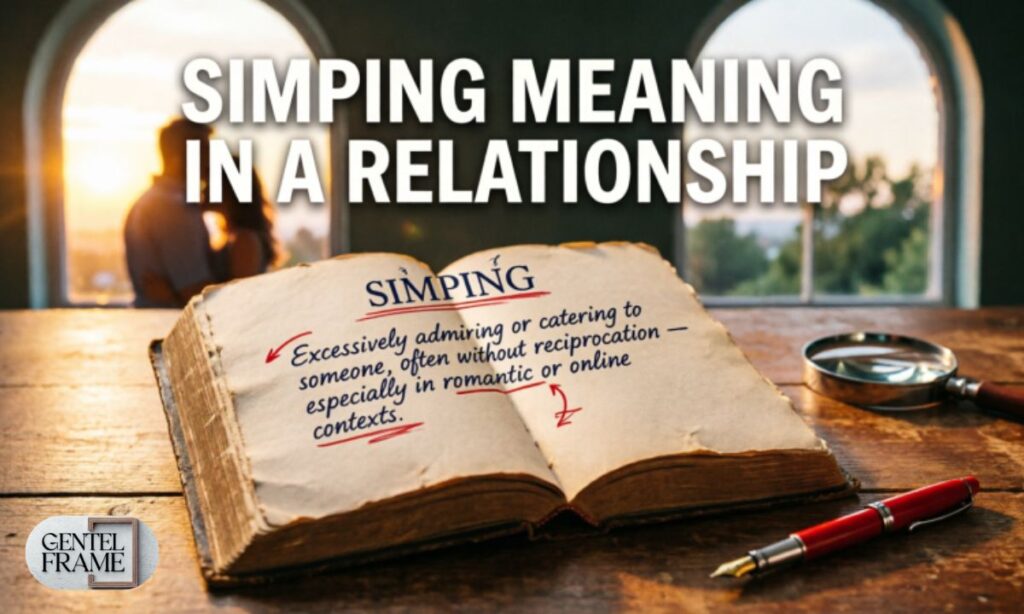
Inside an actual relationship, simping usually shows up as one partner constantly prioritizing the other’s needs, wants, and moods while ignoring their own. It is not the same as being caring or thoughtful. The difference is balance. Healthy affection goes both ways. Simping tends to be one directional.
Is Simping Always Bad in a Relationship?
Not always. A small amount of extra effort, like remembering small preferences or going out of your way occasionally, is normal in any healthy relationship. It becomes a problem when it turns into a pattern where one person consistently gives everything and gets very little acknowledgment or effort back. At that point it can lead to resentment, low self-esteem, and an unhealthy power imbalance.
What is Simping in a Relationship for a Man?
For a man, simping in a relationship often looks like constantly seeking approval, avoiding any disagreement to keep the peace, paying for everything without being asked, and shaping his own decisions entirely around what will please his partner. Over time this can come across as needy rather than genuinely caring, since it removes his own identity and preferences from the relationship.
What is Simping in a Relationship for a Girl?
For a woman, the same pattern applies, though the term has traditionally been used less often for women online. It can look like constantly chasing a partner’s attention, ignoring red flags to avoid conflict, over apologizing, or repeatedly putting the partner’s comfort above her own needs. The behavior itself is not tied to gender. It is tied to imbalance.
Simping Over Someone Meaning
“Simping over someone” simply means being overly infatuated with a specific person, to the point where your behavior noticeably changes. This can be romantic, but it does not have to be serious. Someone might say they are “simping over” a new crush, a celebrity they just discovered, or even a fictional anime character. The phrase highlights intensity rather than romance alone.
Simping Hard Meaning
Adding “hard” to the phrase intensifies it. “Simping hard” means someone is doing this behavior to an extreme, obvious degree, often to the point where friends notice and start commenting on it. It is used both as playful teasing and as genuine concern, depending on context and tone.
Simping Meaning in Chat
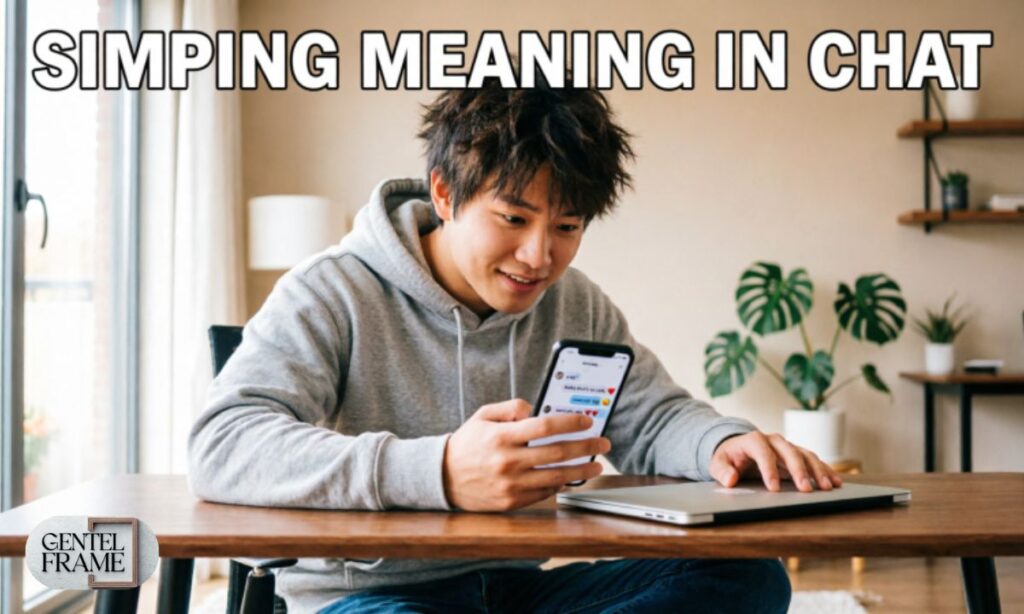
In text messages and group chats, “simping” usually describes someone who is texting way too much, replying instantly every single time, sending long paragraphs to short one word replies, or constantly initiating conversation with no real effort coming back. A friend reading someone’s messages might simply reply “you’re simping” as a quick way of pointing out the imbalance.
Stop Simping Meaning
“Stop simping” is a phrase friends use to tell someone to pull back, protect their own dignity, and stop putting in one sided effort. It is usually said with good intentions, as a nudge to remind the person that they deserve equal energy in return rather than continuing to chase someone who is not reciprocating.
Simping Behavior — What Does It Look Like?
Simping behavior tends to follow recognizable patterns. Here are the most common signs:
- Constantly initiating conversation, even after being ignored
- Agreeing with everything the person says, even when you actually disagree
- Spending money or resources to impress someone who shows little interest
- Dropping your own plans instantly if that person reaches out
- Overpraising the person publicly, on social media or in group chats
- Making excuses for their bad behavior or lack of effort
- Feeling anxious or checking your phone constantly waiting for a reply
None of these signs alone means someone is simping. It is the pattern, repeated consistently and without reciprocation, that defines the behavior.
Examples of Simping in Real Life
Here are a few everyday examples that show how the word is actually used:
- A guy buys an expensive gift for a girl he has been talking to for two weeks, even though she has barely replied to his last five messages.
- Someone comments on every single Instagram post from their crush within minutes, no matter the time of day.
- A person cancels plans with their own friends the moment their crush texts them, every single time.
- A fan spends money on merchandise and events for a celebrity or streamer, jokingly calling it “simping” for their favorite creator.
- In a group chat, someone agrees with everything their crush says, even flip flopping their own opinion mid conversation to match.
Simping vs Other Slang Words
Several slang words describe similar behavior, but each carries its own shade of meaning. Here is a quick comparison.
| Term | Core Meaning | Common Usage |
| Simp | Excessive one sided effort or affection toward someone | Romantic or crush context, sometimes fandom |
| Stan | Extremely devoted fan, usually of a celebrity or public figure | Fandom and pop culture, not always romantic |
| Whipped | Controlled or dominated by a partner in an established relationship | Used within existing romantic relationships |
| Simp Nation | A joking label for a group of people all simping for the same person | Group teasing, internet meme culture |
| Reply Guy | Someone who always shows up in a specific person’s comments online | Social media specific, often public and visible |
| Cuck | A more aggressive insult implying weakness or being taken advantage of | Harsher tone, often used offensively |
Simping overlaps with all of these, but its defining feature is the imbalance of effort, specifically the gap between how much one person gives and how little they get back.
How to Use “Simping” Correctly
Use it when:
- You are describing someone putting in noticeably more effort than the other person in a romantic context
- You are joking around with friends about a crush situation
- You are describing fandom level devotion to a celebrity, athlete, or content creator
- The tone of the conversation is casual and the person will not be genuinely hurt by it
Do not use it when:
- The situation involves a healthy, mutual, established relationship where both people show equal care
- You are trying to shame someone for being kind, supportive, or emotionally open
- The context is serious, sensitive, or involves someone’s genuine feelings being dismissed
- You are unsure whether the person will take the label as a joke or as an insult
Used carelessly, the word can come across as mocking basic kindness or emotional honesty, which is one of the main criticisms the term has faced since it went mainstream.
Frequently Asked Questions (FAQ)
Does simping mean crush?
Not exactly. Having a crush simply means being romantically interested in someone. Simping specifically describes excessive, one sided effort or devotion connected to that interest. You can have a crush without simping, but simping almost always involves a crush or attraction in the background.
What is another word for simping?
Common alternatives include being whipped, acting like a reply guy, being a stan, or old fashioned terms like being smitten or lovestruck, though each of these carries a slightly different tone and context.
What is an example of a simp behavior?
A clear example is someone who texts “good morning” and “good night” every single day to a person who rarely replies, while also liking and commenting on every post that person shares, all without receiving similar attention in return.
Why is simping bad?
Simping is not inherently bad, but the pattern behind it often is. It usually points to low self-worth, one sided investment, and a willingness to ignore your own needs to please someone else. Over time, this can lead to disappointment, resentment, and relationships that feel unequal.
Final Summary
Simping means giving someone excessive, mostly one sided attention or effort, usually rooted in romantic interest, without getting equal energy back. The word has a long history that stretches from an early 1900s insult about intelligence, through 1980s hip-hop culture, all the way to its TikTok driven explosion in 2020.
By 2026, the term has softened and broadened. It now covers everything from serious crushes to lighthearted fandom devotion, and it shows up in casual conversation across almost every language and platform. Used with the right tone, among friends who understand the joke, it is harmless slang. Used carelessly, it can shame genuine kindness or emotional honesty.
