

If you have spent any time watching anime, scrolling TikTok, or browsing manga forums, you have probably run into the word “onii-chan” more than once. It shows up in subtitles, fan comments, memes, and even in real conversations between Japanese families. But what does it actually mean, and why does it carry such different weight depending on where you see it?
This guide breaks down the full meaning of onii-chan, from its literal Japanese roots to how it gets used (and misused) online in 2026.
Short Answer: What Does Onii Chan Mean?
Onii-chan (お兄ちゃん) is a Japanese word that means “big brother” or “older brother.” The “chan” part is a cute, affectionate honorific added to make the word sound warmer and more casual, similar to how English speakers might say “bro” or “big bro” instead of the formal word “brother.”
What Does Onii Chan Mean in English?
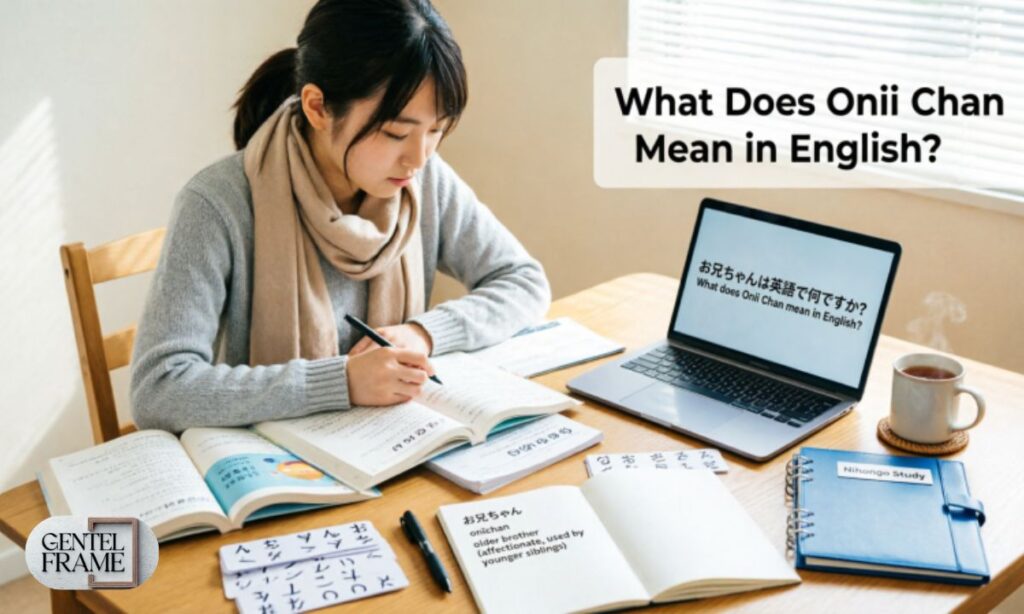
In plain English, onii-chan translates most closely to:
- Big brother
- Older bro
- Big bro
It is not a name. It is a title used to address or refer to an older male sibling, and sometimes an older male friend who feels like family. English does not really have a perfect one word match, because Japanese has a whole system of words for siblings based on age and gender, while English just uses “brother” for everyone.
That is actually one of the biggest points competitor articles skip. English treats all brothers the same. Japanese does not. The moment someone is older than you, the word changes completely.
Click Here To Read another Topic
What Does Onii Chan Mean in Japanese?
Breaking the word down in Japanese:
- お (o) is a polite prefix
- 兄 (nii) means older brother
- ちゃん (chan) is a cute or affectionate suffix
Put together, お兄ちゃん literally reads as “the dear big brother.” Japanese families use this term daily in casual home settings. It is warm, informal, and typically used by younger siblings, especially children, though plenty of adults still use it too, particularly if they grew up calling their brother that and never stopped.
What Does Onii Mean in Japanese?
“Onii” on its own is short for oniisan or onii-chan and simply refers to an older brother. You will rarely hear “onii” completely by itself in natural conversation. It almost always comes with a suffix attached, such as:
- Onii-chan (casual, affectionate)
- Onii-san (polite, standard)
- Onii-sama (very formal or reverent)
- Aniki (rougher, more masculine, often used among friends or in yakuza style media)
Each suffix changes the emotional tone of the word without changing its core meaning.
Onii-San Meaning — What’s the Difference?
This is one of the most searched follow up questions, so here is a direct comparison.
| Term | Formality Level | Common Use |
| Onii-chan | Casual, affectionate | Young children, close family, cute tone |
| Onii-san | Neutral, polite | General use, addressing any older male stranger politely |
| Onii-sama | Formal, reverent | Wealthy or noble family settings, anime characters with elegant personalities |
| Aniki | Rough, masculine | Friend groups, gang or delinquent themed shows |
Onii-san is the safest, most versatile option. It can be used for your actual older brother, or as a polite way to refer to a young man you do not know, similar to saying “young man” or “sir” in English. Onii-chan, on the other hand, signals closeness and affection. You would not call a random stranger onii-chan unless you were being playful or flirtatious.
What Does Onii Chan Mean for a Girl / From a Girl?
When a girl calls someone onii-chan, it almost always means she sees that person as an older brother figure, whether by blood or by bond. This shows up constantly in anime and manga where a younger sister character (imouto) refers to her older brother this way throughout the story.
It can also be used by:
- A younger female friend toward an older male friend she feels close to
- A girlfriend using it playfully with a partner, though this is a specific niche use discussed further down
- A voice actor or content creator playing a “little sister” character online
The meaning shifts depending on the relationship, but the root idea stays the same. It signals warmth, familiarity, and a sense of looking up to someone older.
What Does Onii Chan Mean Sexually?
This is where a lot of the confusion online comes from, so let’s be direct about it.
In its original Japanese context, onii-chan has nothing to do with romance or sexuality. It is a family term used the same way “big brother” is used in English speaking households.
However, in certain corners of Western internet culture, particularly adult roleplay content, fan communities, and ASMR channels, “onii-chan” has been adopted as a kink term. In that specific subculture, it gets used as a roleplay title between consenting adults, similar to how other pet names or roleplay titles get borrowed from pop culture and repurposed. This use is entirely separate from the original Japanese meaning and is not how the term is used in real Japanese households or general anime dialogue.
It is worth being clear here: this sexualized usage is a niche internet trend tied to adult content creation, not a mainstream anime trope, and it does not reflect how the word functions in everyday Japanese or in the vast majority of anime and manga, which use it purely as a family term.
Why Is Onii-Chan Sexualized?
A few factors explain how this shift happened online:
- Anime often features close sibling relationships, and Western meme culture tends to exaggerate and repurpose emotionally intense anime tropes for comedic or ironic effect.
- The “cute” sound of the word made it popular in meme formats long before any sexual connotation attached to it.
- A small number of adult content creators adopted the term for roleplay titles, which then spread through search trends and social media, making the sexualized association more visible online than it actually is in Japan.
- Algorithm driven platforms tend to amplify whatever version of a trend gets the most engagement, which pushed the meme heavy, exaggerated version of the term further than its original meaning.
None of this reflects how Japanese speakers actually use the word day to day. In Japan, it remains a completely ordinary family term.
What Does Onii Chan Mean in Anime?
In anime, onii-chan is one of the most common words you will hear, especially in slice of life, family drama, and school themed shows. It is used to:
- Address an older brother directly
- Refer to an older brother when talking to someone else
- Show affection or dependence on an older sibling character
- Build comedic tension in shows that lean into sibling dynamics for humor
Anime relies heavily on this word because Japanese storytelling puts a lot of weight on family roles and hierarchy. A character calling someone onii-chan instantly tells the audience about their relationship and emotional closeness without needing extra dialogue.
Onii-Chan Anime Girl — Common Tropes Explained
The “onii-chan anime girl” search term usually refers to the imouto (little sister) archetype, a very common character type in anime and manga. Common tropes tied to this character type include:
- The devoted little sister who idolizes her older brother
- The tsundere sister who acts tough but secretly cares deeply
- The overly attached sister used for comedic effect
- The protective sister who steps in during emotional moments
These characters are a staple of Japanese storytelling and have existed in family dramas long before anime became popular internationally. The trope is not inherently romantic. Most of the time it simply reflects close sibling bonds, family responsibility, and coming of age themes common in Japanese fiction.
What Does Onii Chan Mean in Hentai?
Hentai is a specific genre of adult animated content aimed strictly at adult audiences. Within that genre, sibling terminology including onii-chan sometimes appears as part of fictional storylines and roleplay dialogue between adult characters.
This use is a genre specific storytelling device found in a narrow category of adult media and does not represent how the term functions in mainstream anime, manga, or real Japanese conversation. Outside of this specific adult genre, onii-chan simply means big brother, nothing more.
What Does Onii Chan Mean in Korean?
Korean has its own separate system of sibling honorifics and does not use onii-chan natively. The closest Korean equivalent for a girl speaking to her older brother is “oppa” (오빠), and for a boy speaking to his older brother it is “hyung” (형).
While onii-chan and oppa serve a similar cultural function, they come from two completely different languages and are not interchangeable. Korean fans sometimes borrow onii-chan casually online when discussing Japanese anime, but it is not a native Korean term.
What Does Onii Chan Mean in Chinese?
Chinese also has its own detailed sibling vocabulary. The closest equivalent to onii-chan in Mandarin is “gege” (哥哥), which means older brother and can carry a similarly warm, affectionate tone when used casually.
Like Korean, Chinese speakers sometimes use the Japanese term onii-chan in fan spaces when discussing anime directly, but gege remains the natural, native equivalent in everyday Chinese conversation.
What Does Onii Chan Mean in Spanish?
Spanish does not have a single word honorific system like Japanese. The closest natural translation is “hermano mayor” (older brother) or the casual “hermanito” or simply “hermano” used affectionately.
Spanish speaking anime fans often keep the original Japanese word onii-chan when talking about anime characters specifically, since it carries a cultural flavor that a direct translation would lose.
What Does Onii Chan Mean in Japan (Real Life)?
In real Japanese households, onii-chan is simply how many children and even adults address their older brother. It is completely normal, non romantic, and used the exact same way an English speaking kid might say “big bro.”
A few real life notes that most articles miss:
- Many Japanese adults continue calling their older brother onii-chan well into adulthood, especially around family.
- Younger children in Japan sometimes use onii-chan or onee-chan to politely address any older child or young adult stranger, similar to calling someone “big sister” or “big brother” out of politeness rather than actual family relation.
- It is common in customer service or casual settings for a young stranger to be addressed this way by small children, with zero romantic or sexual meaning attached.
Understanding this real world context helps explain why the sexualized internet version feels so disconnected from how the word is actually used in Japan.
Onii Chan Yamete Kudasai Meaning
This phrase translates to “big brother, please stop.” It became a popular internet meme phrase, often used sarcastically or jokingly in online comment sections, memes, and reaction posts.
Breaking it down:
- Onii-chan: big brother
- Yamete: stop
- Kudasai: please (polite request marker)
In genuine Japanese conversation, this phrase would simply be someone asking their older brother to stop doing something, whether that is teasing them, taking their food, or bothering them. Online, it has become a meme phrase largely detached from its literal, everyday meaning.
Onii Chan Daisuki Meaning
“Onii-chan daisuki” translates to “I love you, big brother” or “big brother, I love you.” Daisuki (大好き) is a common Japanese word expressing strong liking or love, often used between family members, friends, or romantic partners depending on context.
In a sibling context, this phrase expresses genuine affection, the kind of thing a younger sibling might say to show appreciation for their older brother. It has also become a popular meme and fan phrase online, often used in a playful or exaggerated tone rather than its original sincere meaning.
Other Onii Chan Phrases Explained
Ohayo Onii-Chan
“Ohayo” means “good morning.” Combined, “ohayo onii-chan” simply means “good morning, big brother,” a normal greeting used at the start of the day.
Ohio Onii-Chan
This is a misspelling or intentional meme variation of “ohayo onii-chan,” playing on the similarity between “ohayo” and the US state name “Ohio.” It has spread as an internet joke format rather than an actual Japanese phrase.
Arigato Onii-Chan
“Arigato” means “thank you.” This phrase translates to “thank you, big brother,” typically used when a younger sibling appreciates something their older brother did for them.
Sayonara Onii-Chan
“Sayonara” means “goodbye,” often implying a longer or more final farewell than a casual goodbye. This phrase translates to “goodbye, big brother.”
Onii-Chan No Baka / Onii-Chan Baka
“Baka” means “idiot” or “stupid” in a light, teasing way. This phrase translates to “big brother, you idiot” or “silly big brother,” commonly used in a playful, affectionate tone rather than as a genuine insult.
Onii-Chan Daisuki
Covered above, this phrase means “I love you, big brother,” expressing strong affection.
Ara Ara Onii-Chan
“Ara ara” is a Japanese expression of mild surprise, often used by older female anime characters in a teasing or motherly tone. Paired with onii-chan, it has become a popular meme format online, though it is not a standard phrase used in real Japanese conversation.
UWU Onii-Chan
“UWU” is an internet emoticon representing a cute or affectionate expression, unrelated to Japanese language itself. When paired with onii-chan, it reflects internet meme culture rather than authentic Japanese usage, often used ironically or humorously in English speaking online spaces.
Onii-Chan Chan
This is typically a meme format or intentional repetition for comedic effect, adding an extra “chan” for exaggerated cuteness. It is not standard Japanese and exists mainly as an internet joke.
Full Japanese Honorifics & Family Words Table
| Term | Meaning | Formality |
| Onii-chan | Big brother (affectionate) | Casual |
| Onii-san | Older brother (general) | Polite |
| Onii-sama | Older brother (reverent) | Very formal |
| Onee-chan | Big sister (affectionate) | Casual |
| Onee-san | Older sister (general) | Polite |
| Onee-sama | Older sister (reverent) | Very formal |
| Otouto | Younger brother | Neutral |
| Imouto | Younger sister | Neutral |
| Aniki | Big brother (rough, masculine) | Casual to informal |
| Ane | Older sister (plain) | Neutral |
Common Spelling Variations
People searching for this term online often type it differently. Common variations include:
- Onii chan
- Oniichan
- Onii-chan
- Onichan
- Onni chan
- Onnichan
All of these refer to the same word. The spelling with double “i” (onii) is the most accurate romanization, since it reflects the long vowel sound in the original Japanese pronunciation.
How to Use Onii Chan Correctly (and When NOT To)
When It’s Perfectly Fine
- Talking about an anime or manga character’s sibling relationship
- Referring to your own older brother in a casual, affectionate way if you speak Japanese or are close to Japanese culture
- Using it in fan communities when discussing characters or shows
- Learning it as part of genuine Japanese language study
When to Be Careful
- Calling a stranger onii-chan in real life can come across as overly familiar or odd outside of specific playful contexts
- Using it in a romantic or sexual context outside of clearly consenting adult roleplay spaces can create confusion or discomfort
- Assuming it always carries a sexual meaning, which is inaccurate and disrespectful to its actual cultural use
What It Does NOT Mean
- It does not mean boyfriend
- It does not inherently mean anything sexual
- It is not an insult
- It is not exclusive to anime, it is used constantly in real Japanese life
Frequently Asked Questions
Is onii-chan a romantic term?
No. At its core, onii-chan simply means big brother. Any romantic or sexual association comes from a small, specific corner of internet and adult content culture, not from the actual Japanese meaning of the word.
Can I call my boyfriend onii-chan?
Some couples use it playfully as a private nickname, similar to how some English speaking couples use unconventional pet names. It is not standard or expected, and it is not how the term is used in general Japanese society.
Is onii-chan only used in anime?
No. It is a real, everyday word used in Japanese households, completely separate from anime and manga, though anime is where most non Japanese speakers first encounter it.
What is the difference between onii-chan and onii-san?
Onii-chan is more casual and affectionate, typically used with close family or in a cute tone. Onii-san is more polite and neutral, usable with strangers or in general conversation.
Why do people online associate onii-chan with something sexual?
This association mostly comes from a niche trend within Western adult content and meme culture, not from actual Japanese usage. In Japan, the word remains a standard, non sexual family term.
Final Thoughts
Onii-chan is, at its heart, a simple and warm Japanese word for big brother. Its meaning shifts slightly depending on tone, formality, and context, but the core idea never changes. It reflects closeness, respect, and family affection.
The sexualized version you might stumble across online represents a small, specific internet trend, not the real cultural meaning of the word. If you are learning Japanese, watching anime, or just curious about the language, it helps to remember where the word actually comes from and how ordinary its everyday use really is.
